

It was a privilege to attend the Welsh Conservative Party Conference at the invitation of my friend and fellow member of the Conservative Christian Fellowship, Juliet Donoghue. A former local councillor and director of the CCF since January 2024, Juliet has worked tirelessly to strengthen the bridge between Christian conviction and public engagement. From the Wilberforce Address at Portcullis House to prayer breakfasts and conference gatherings, her leadership has consistently encouraged thoughtful and gracious dialogue.
During the conference, we were delighted to speak with a range of politicians and patrons across the party. The highlight for me personally was meeting the Leader of the Conservative Party, Kemi Badenoch. In conversation, I mentioned the remarkable Nigerian archbishop who prayed for me when I was just 20 years old, Archbishop Benson Idahosa.
Kemi smiled and said she had not heard that name for a long time. As we reflected, I was reminded of how great men and women sometimes fade from public memory, yet the message they carried continues to shape generations.


A Story from Archbishop Benson Idahosa’s Life
Archbishop Benson Idahosa was a pioneer of Pentecostal Christianity in Nigeria. At a time when open-air crusades were rare and Christianity faced resistance in certain regions, he preached with courage and conviction. One well-known episode from his ministry tells of a city where hostility toward the Gospel was strong. Despite opposition, he continued to preach publicly. Over time, hearts softened. Churches were planted. Communities were transformed.
He went on to plant thousands of churches, often said to be over 6,000, and helped establish what would become one of Africa’s most influential Christian movements. Yet what marked him most was not simply numerical growth, but bold faith. He believed that the Gospel was not merely words, but power, power to heal, restore, and uplift communities.

His life echoes the words of the Apostle Paul:
“For I am not ashamed of the gospel of Christ: for it is the power of God unto salvation to every one that believeth…” (Romans 1:16)
Paul wrote those words while longing to preach in Rome, the political and cultural heart of the empire. He understood that the Gospel was not confined to private devotion. It had public implications. It spoke into the moral, social, and civic life of the world’s greatest cities.
The Gospel and Political Engagement
As Christians, our ultimate allegiance is to Christ. Yet Scripture does not call us to withdraw from public life. Jesus declared that we are “the light of the world” (Matthew 5:14). Light is not meant to be hidden; it is meant to illuminate.
The prophet Jeremiah instructed the exiles in Babylon:
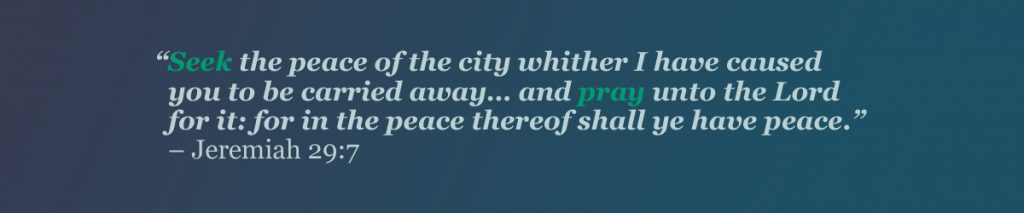
“Seek the peace of the city whither I have caused you to be carried away… and pray unto the Lord for it: for in the peace thereof shall ye have peace.” (Jeremiah 29:7)
That instruction was given in a foreign political environment. The principle remains: believers are to seek the welfare of the society in which they live.
Engagement in the political process, whether Conservative, Labour, Liberal Democrat, Reform, or any other lawful democratic expression, is not about baptising a party platform. It is about bringing conscience, integrity, prayer, and moral clarity into the public square. Christians may disagree robustly on policy details, but they should agree on the dignity of human life, the importance of family, justice, compassion, and accountability.
Archbishop Benson Idahosa demonstrated that faith can shape a nation. Not through coercion, but through conviction. Not through bitterness, but through belief in the transforming power of the Gospel.
A Higher Message
Meeting Kemi Badenoch and reflecting on Archbishop Idahosa reminded me that while leaders rise and fall, the message of Christ endures. Political leadership is important. Public policy matters. Yet the deeper need of every nation is spiritual renewal.
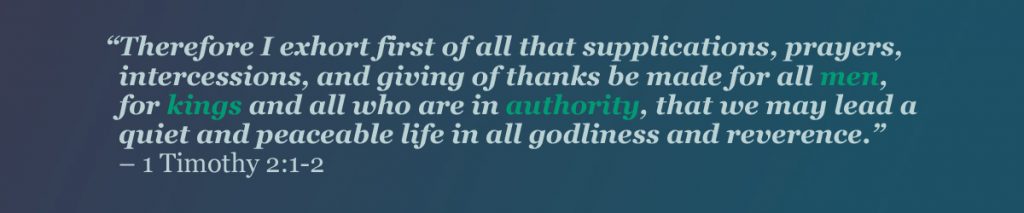
When Christians engage in political life, they must do so statesmanlike, respectful of opponents, honouring lawful authority, and refusing the temptation of cynicism. We must pray for those in power, regardless of party (1 Timothy 2:1–2). We must speak truth with grace. And we must remember that no earthly platform replaces the eternal Kingdom of God.
Archbishop Idahosa once stood in open fields preaching Christ in the face of resistance. Paul longed to preach in Rome. Today, whether in Parliament, conference halls, community centres, or churches, the call is the same:
Be unashamed of the Gospel.
Engage with courage.
Serve with integrity.
And trust that the message will outlive the messenger.
In the end, great people may fade from memory, but the Word of God never will.